

The ROI of Experience: Why Design Drives Value in Real Estate Development
Moving Beyond the Spreadsheet
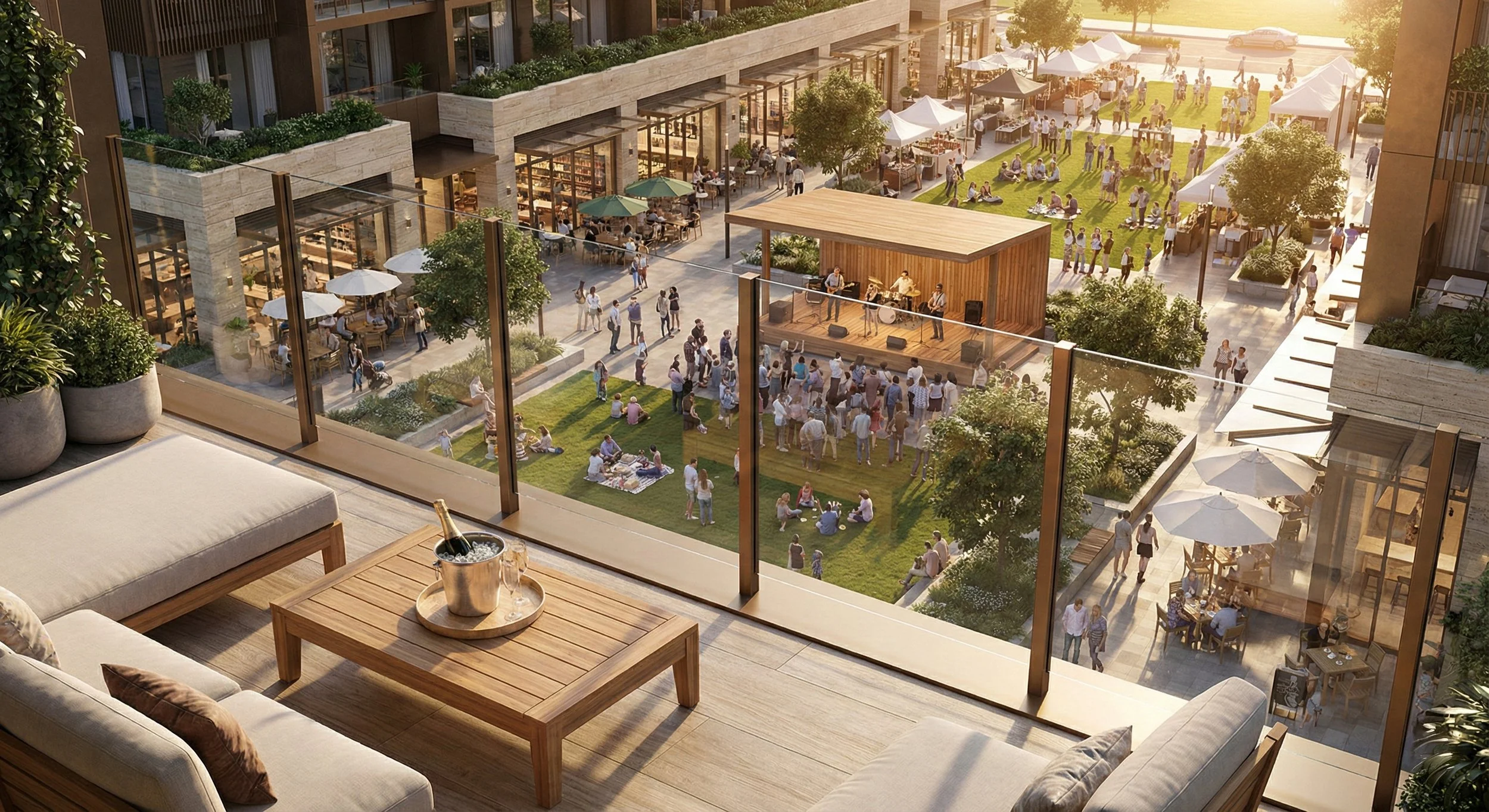
The 'Park View Premium' in Action: This rendering illustrates the financial power of the Central Green. By creating a high-quality, activated public space (with concerts, markets, and dining), you are essentially creating "waterfront property" on a landlocked site. The units on this balcony, with a direct view of the action, command significant rent premiums over units facing the street.
In real estate development, every square foot is analyzed for yield. When an architect proposes turning a prime section of a site into a "Central Green" or public plaza, the financial team often pushes back. The common objection is simple: "That is lost leasable area. We need to focus on ROI, not aesthetics."
This line of thinking is a mistake.
In today's market, you cannot design for ROI directly. You design for the Human Experience, and the ROI follows. Aesthetics and experience are not "extra" costs; they are the economic engine that drives the value of the entire asset.
What is the "Klyde Warren Effect"?
There is no better proof that design drives value than Klyde Warren Park in Dallas.
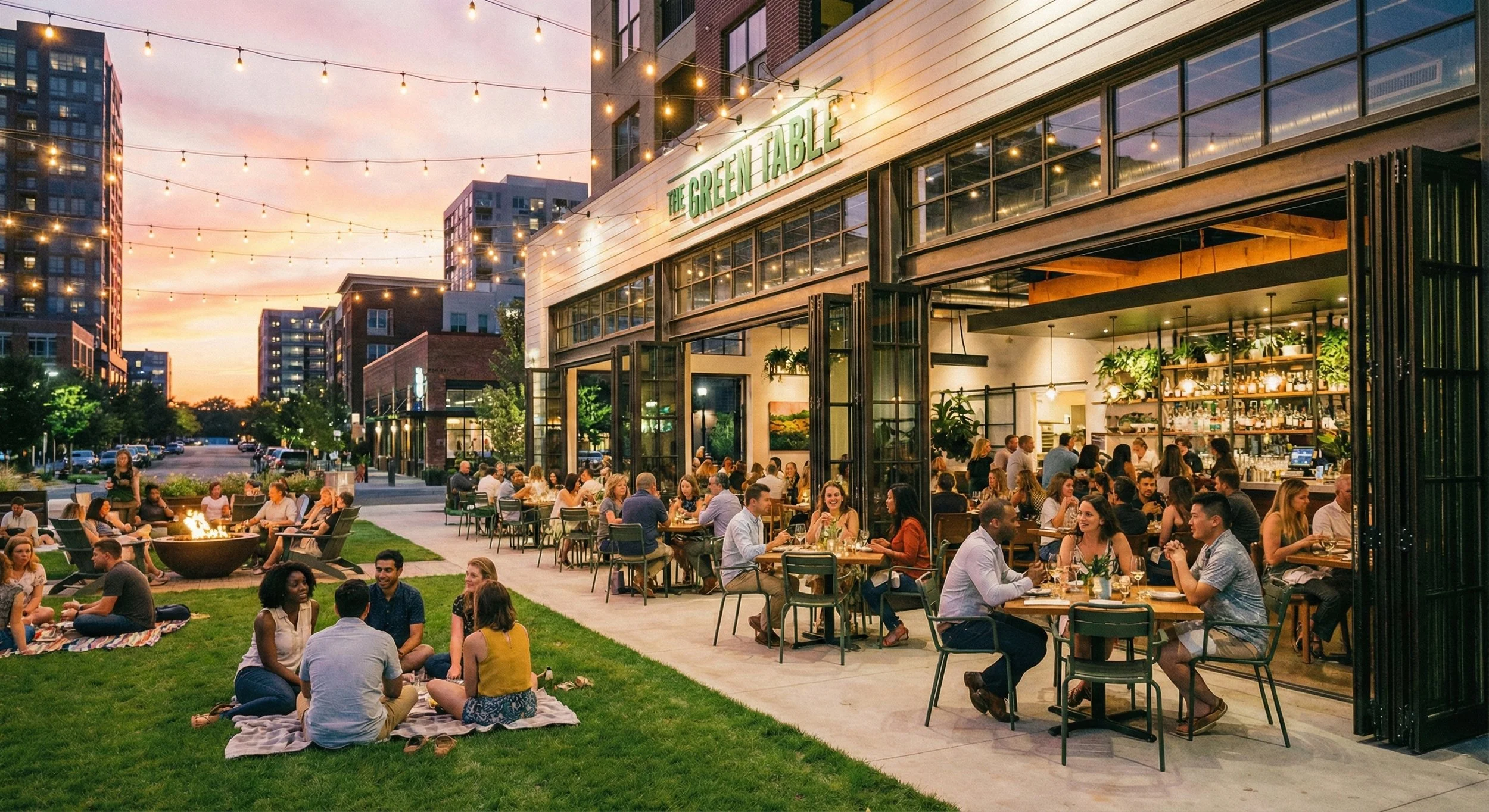
The 'Active Edge' Strategy: This image perfectly illustrates the concept of "Spill-Out Retail." By using folding glass doors to erase the barrier between the restaurant and the Central Green, the tenant doubles their seating capacity and the park becomes an extension of the dining room—a key driver for commercial rent premiums.
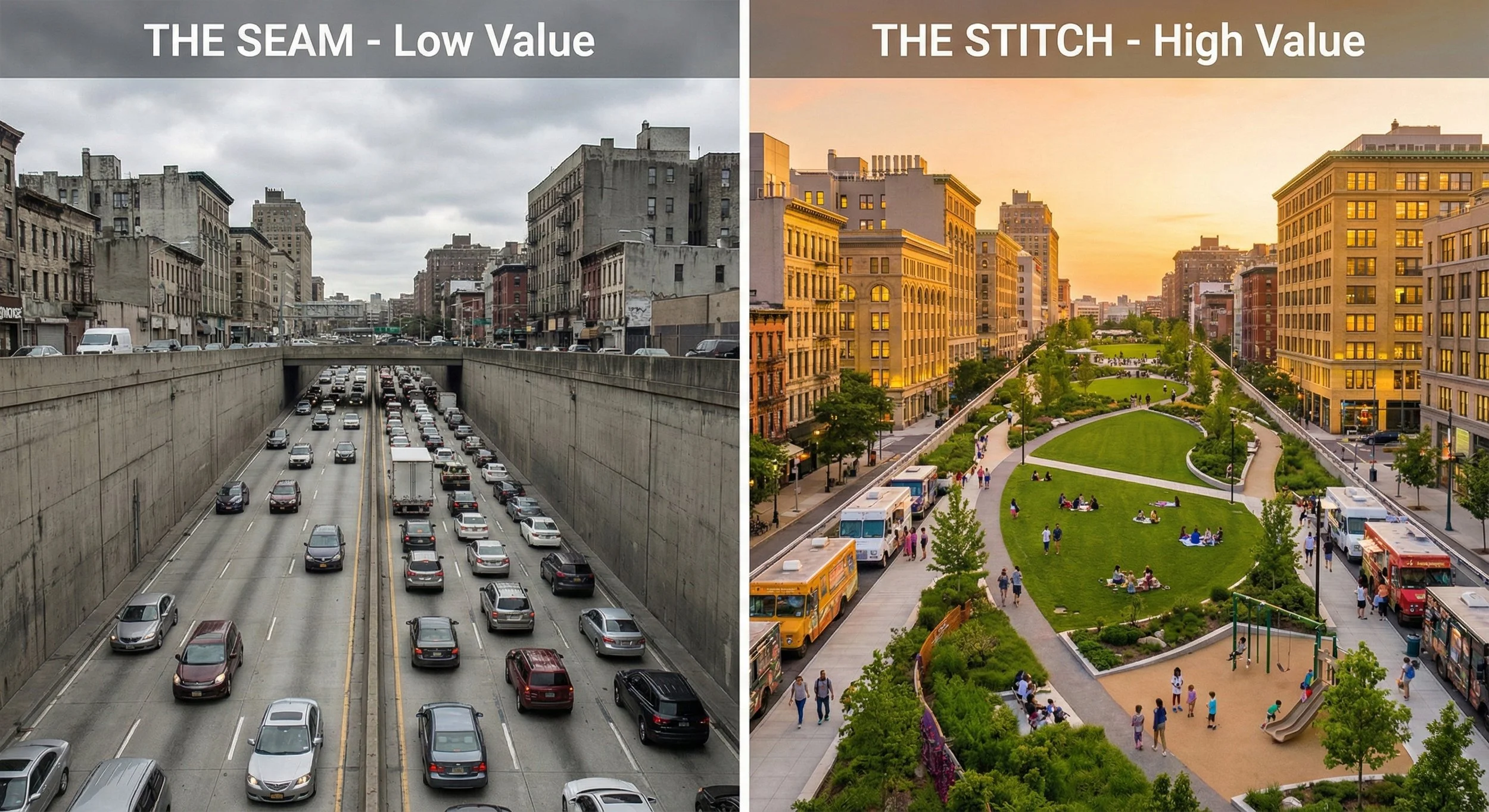
The Klyde Warren Effect: This graphic illustrates the difference between a "Seam" (a dividing highway that suppresses value) and a "Stitch" (a connecting park that creates value). By capping the infrastructure with a high-quality public space, you turn a liability into a front-lawn asset, skyrocketing the value of the surrounding real estate.
Before the park existed, the area was defined by a concrete highway canyon that severed the city's districts. The construction of a deck park over the highway was a massive investment in "Beauty" and "Experience."
The result was an immediate economic boom. The park didn't just provide a place to sit; it ignited a frenzy of development. Real estate values for properties facing the park skyrocketed, proving a fundamental rule of modern development: If you create a massive asset for the community, you create a massive asset for the developer.
The Design Anatomy of High-ROI Public Spaces
To achieve the kind of returns seen in projects like Midtown Tampa or The District in Katy, the public space cannot be an afterthought. It must be designed with "Active ROI" in mind.
Here are the three pillars of Experience-Driven Design:
1. The Edge Condition (The Spill-Out) The most critical line on any site plan is where the building meets the public realm.
The Mistake: Placing a sidewalk and a heavy glass storefront between the retail and the park. This creates a barrier.
The Solution: Retail must "spill out." Patios should extend directly into the green space. The energy of the restaurant should bleed into the energy of the park, creating a seamless "Third Place."
2. The "Goldilocks" Scale Scale is the silent killer of public spaces.
Too Big: The space feels desolate and unsafe unless there are 500 people in it.
Too Small: It feels like a private backyard, and the public doesn't feel welcome.
Just Right: A successful Central Green feels vibrant with just 20 people in it but is flexible enough to host a concert for 200.
3. Beauty as a Functional Requirement We often dismiss "beauty" as subjective. In development, beauty is functional. If the space isn't attractive enough to pull a person out of their apartment or office, it fails to generate foot traffic. High-quality lighting, landscaping, and hardscaping are not decorations; they are retention tools.
The Financial Case: How Experience Increases Revenue
When you prioritize Human Experience in your site plan, the ROI appears in three specific places on the pro-forma:
The "Park View" Premium: Just like waterfront property, units facing an active, beautiful Central Green command 15–20% higher rents than units facing the street or parking deck.
The "Anchor" Replacement: In the past, department stores anchored developments. Today, the Experience is the anchor. A vibrant green space drives the foot traffic that keeps ground-floor commercial tenants profitable.
Retention as Revenue: Residents do not renew leases for a drywall box. They renew because they love the lifestyle the building provides. Community connection creates an emotional switching cost that keeps occupancy high.
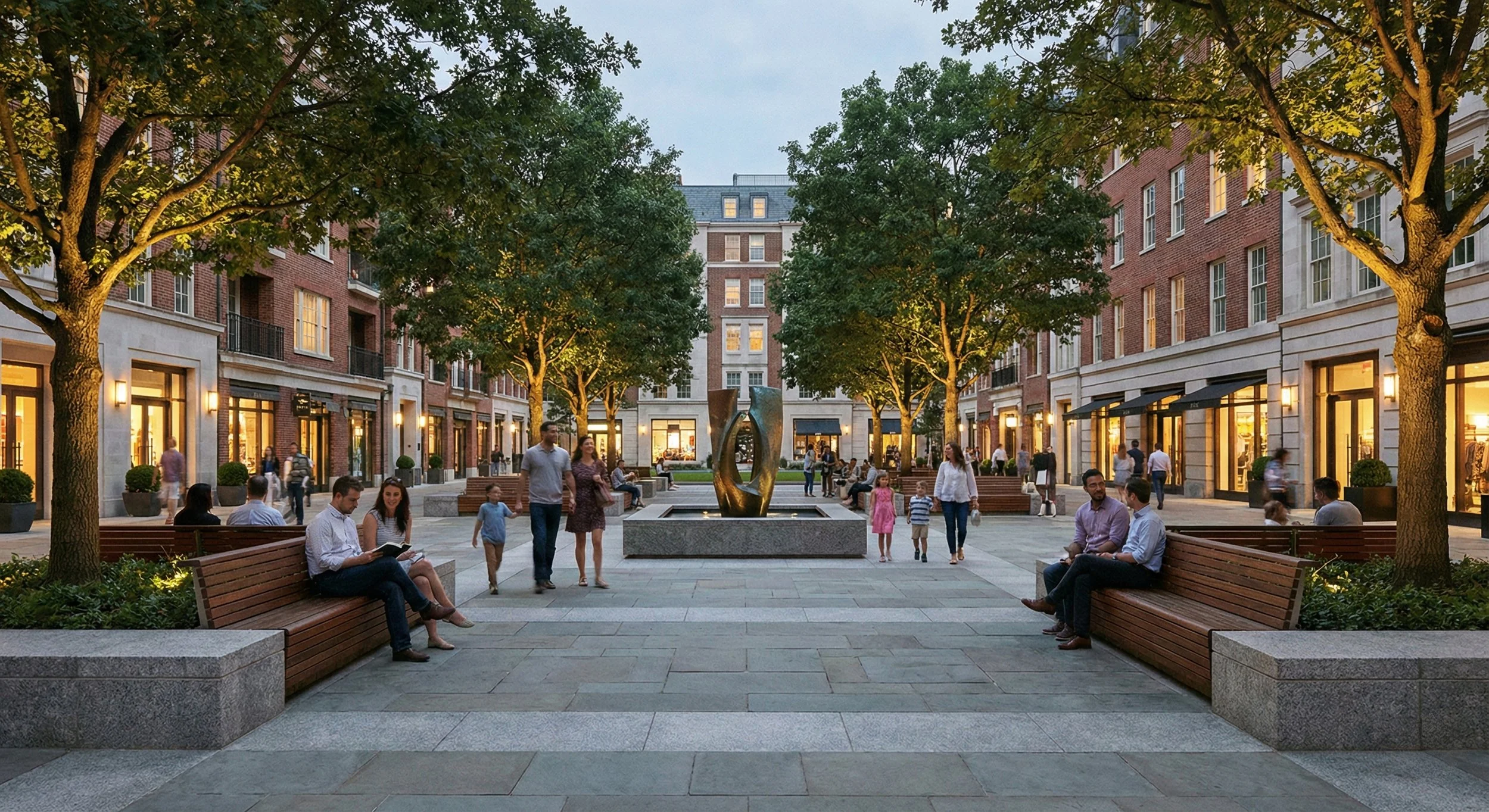
The ROI of the Public Realm: This isn't just a sidewalk; it’s an outdoor living room. By investing in high-quality materials (stone pavers, mature trees, and art) the developer signals "Luxury" before a tenant even enters the lobby. This level of finish is what justifies premium rents and ensures that the ground-floor retail remains a destination, not just a pass-through.
Conclusion: Design is the Differentiator
The market is moving away from generic commodity housing. The developers who continue to treat the public realm as "lost leasable area" will struggle to compete.
Don't ask, "How much money does this green space cost me?" Ask, "How much value will this Experience create for every unit looking down on it?"
Are you a developer looking to maximize your site's potential? Stop building for the spreadsheet and start building for the market. Contact us today to discuss how we can design a "Village" concept that drives long-term value for your next project.
