

If you look at the multifamily and student housing markets today, you will see a massive assumption being made by developers across the board. They treat apartments as commodities.
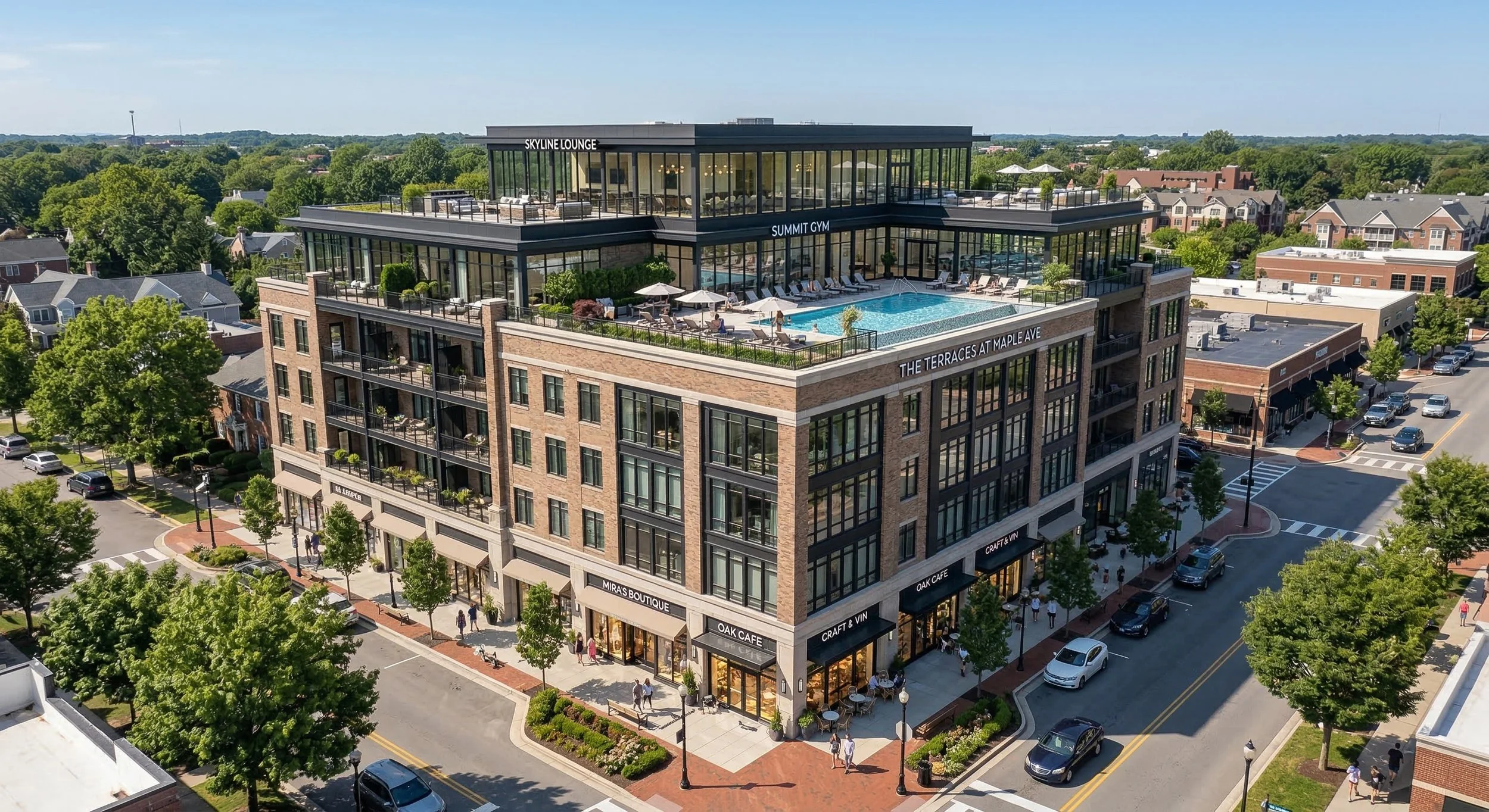
Meet 'The Mercer.' This is what designing for ROI can look like in practice: active ground-floor retail, expansive windows for natural light, and a 4th-floor pool deck that actually builds community. This is how you beat commodity architecture.
The prevailing logic is that a two bedroom unit in Building A is interchangeable with a two bedroom unit in Building B. The only things that matter are the location, the price point, and whether or not there is a gym on the ground floor.
That assumption is fundamentally wrong.
I recently completed a market analysis for a project at 225 Moon Clinton Road, positioned near Robert Morris University. Right now, this site is what the industry classifies as a Class C property, essentially a dilapidated no tell motel. The standard developer playbook for a site like this is painfully predictable: snatch it up, do the bare minimum required to get an occupancy permit, and throw it onto the rental market. Then, two years later, they scratch their heads wondering why they are bleeding cash through high vacancy rates.
As an architect who partners with developers, I frequently hear variations of the same questions: How do we increase our multifamily ROI? Is student housing actually more profitable? Why will our Class C property not lease up? The answer to all of these comes down to one thing: Resident Experience. Here is the math on why thoughtful architecture is your best defense against a soft market, and exactly how we design spaces to drive revenue.
FAQ: How do you increase multifamily ROI and justify rental premiums?
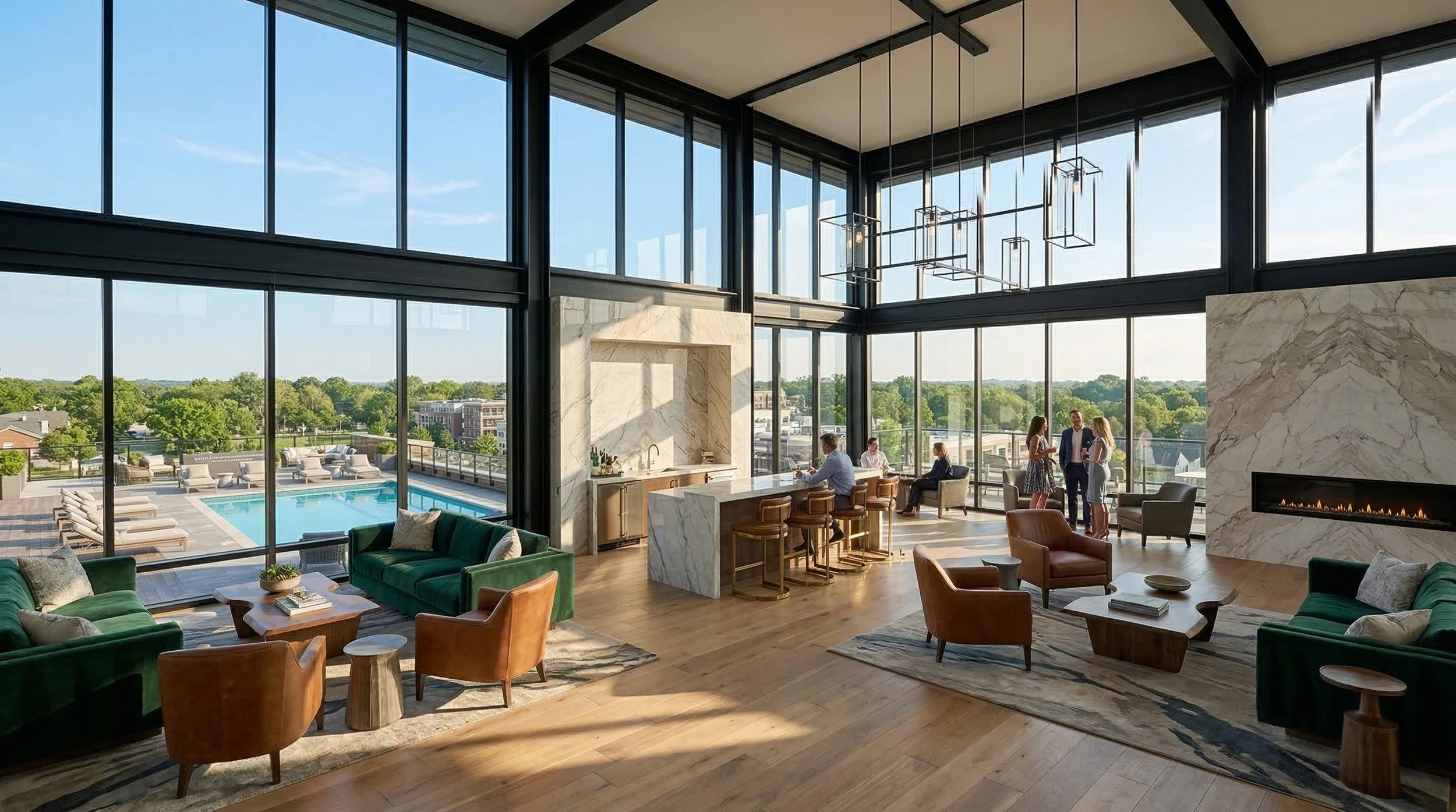
The Penthouse Lounge at 'The Mercer.' Thoughtfully designed, light-filled amenities like this aren't afterthoughts, they are the ROI drivers that secure rental premiums and build community.
When you build a commodity product, you compete purely on price. When you build an experience, you compete on value.
Think about a time you walked into a building and immediately thought, "Man, I would love to live here." Was it the natural light flooding the lobby? The intuitive flow of the space? That specific feeling, that immediate desire to occupy a space, is exactly what we are designing for.
Our market analysis shows that properties prioritizing a thoughtful resident experience outperform commodity counterparts on every critical financial metric:
15% to 25% Faster Lease Up: Properties designed with the resident in mind lease up significantly faster, reducing carrying costs and accelerating cash flow.
3% to 5% Higher Occupancy: Month after month, these buildings maintain higher occupancy rates.
5% to 10% Rental Premium: A well designed space that supports a quality resident experience commands a 5% to 10% premium over comparable commodity products within the same class tier.
To achieve this, you must prioritize Natural Light and Layout. A room with a large window feels bigger and better. Period. Avoiding long, internal hallways that block light flow can increase the perceived size of a unit by 15% to 20%. This kind of spatial quality, combined with open concept living, is what justifies that premium.
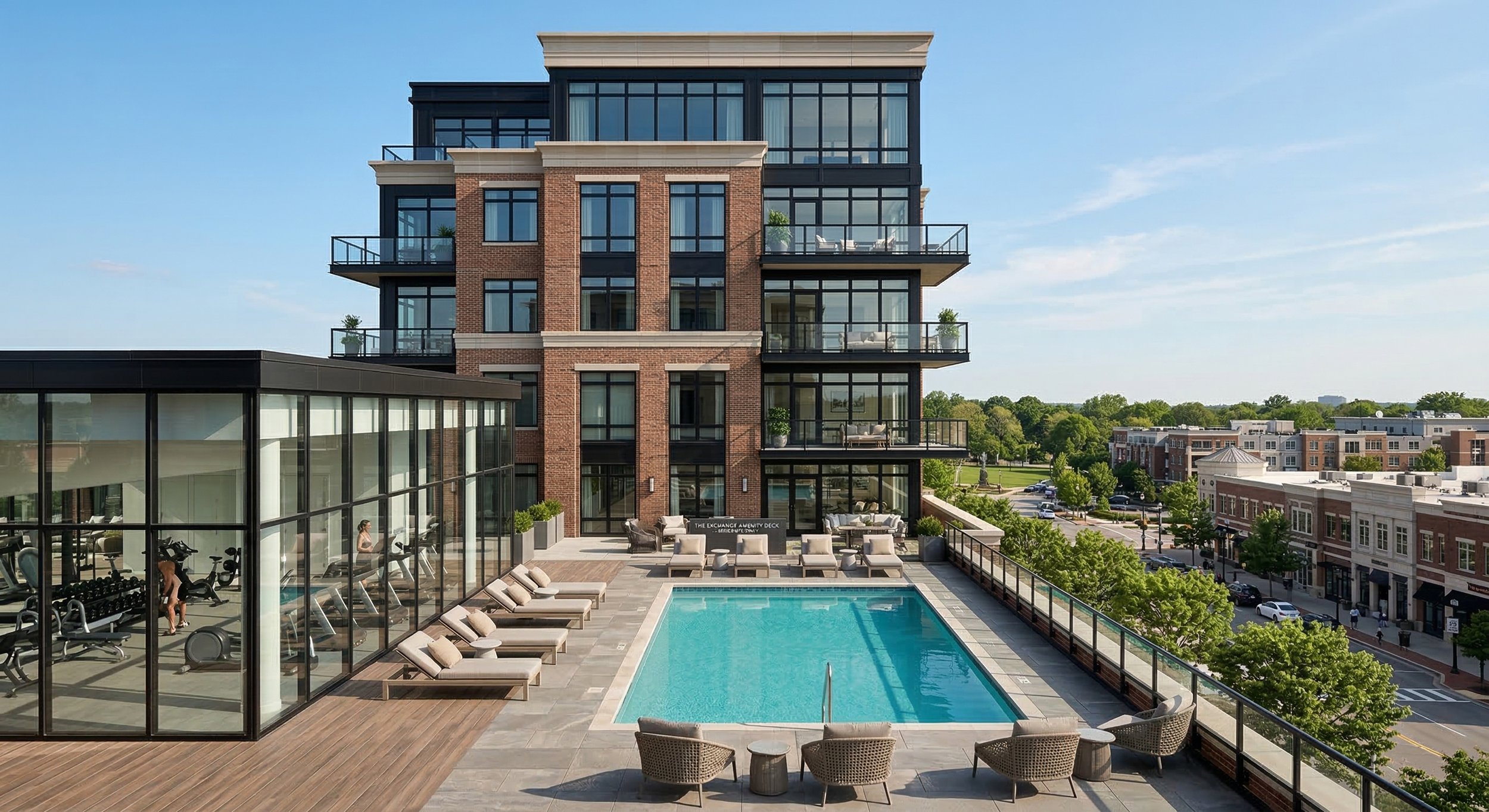
The 4th-Level Amenity Deck: Demonstrating how thoughtful design converts square footage into community value. Our 'The Mercer' concept features a glass-enclosed gym and pool deck that are flooded with natural light, converting standard amenities into high-performing assets.
FAQ: Do multifamily amenities actually matter in 2026?
Yes, but not the way most developers think. Modern residents expect amenities like a gym, a game room, or a community lounge. They are table stakes.
But developers constantly fail by treating these spaces as afterthoughts. Shoving two treadmills into a windowless basement does not make a fitness center. To drive ROI, amenities must be thoughtfully included, flooded with natural light, and positioned to actively encourage community interaction. They are part of that symbiotic relationship that makes a tenant want to sign a lease.
FAQ: How important is acoustic performance in multifamily buildings?
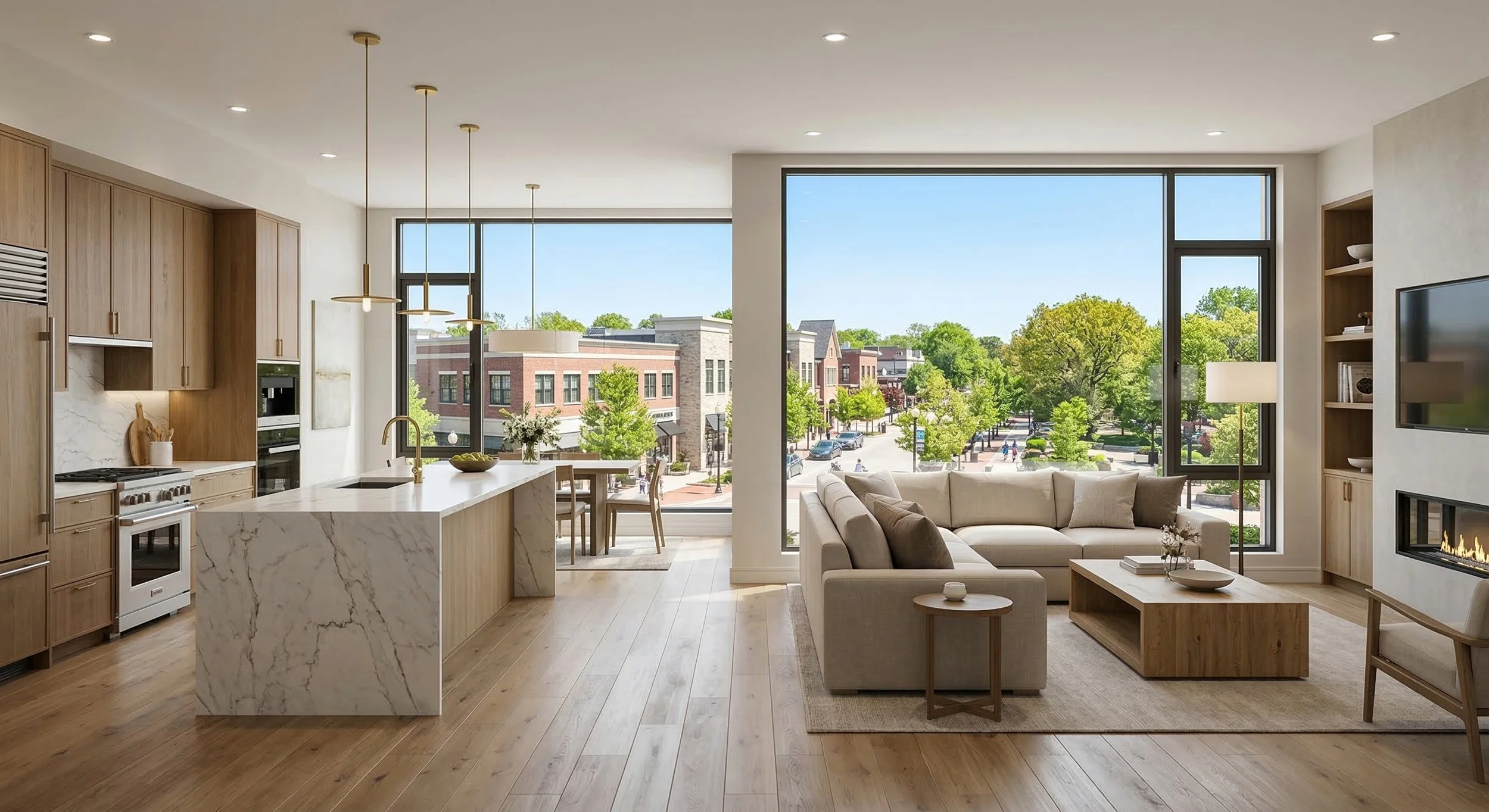
Expansive floor-to-ceiling windows flood this open-concept layout with natural light, showcasing how thoughtful design drives a superior resident experience and delivers measurable rental premiums over commodity alternatives.
In multifamily housing, nothing destroys resident satisfaction faster than hearing your neighbor playing music through the wall or heavy footsteps from the unit above.
This is not just an anecdotal complaint; it is backed by national data. According to recent surveys polling hundreds of thousands of renters nationwide, a staggering majority specifically cite soundproof walls as a top desired feature.
For the Moon Clinton project, I recommended STC 55 plus assemblies, not just in the shared walls, but critically, in the floor and ceiling assemblies to prevent vertical noise transmission. You should feel entirely comfortable and isolated in your own space. Eliminating neighbor noise drastically increases tenant satisfaction, eliminates complaints, and guarantees lease renewals. It is the ultimate silent amenity.
FAQ: Is student housing more profitable than traditional multifamily?
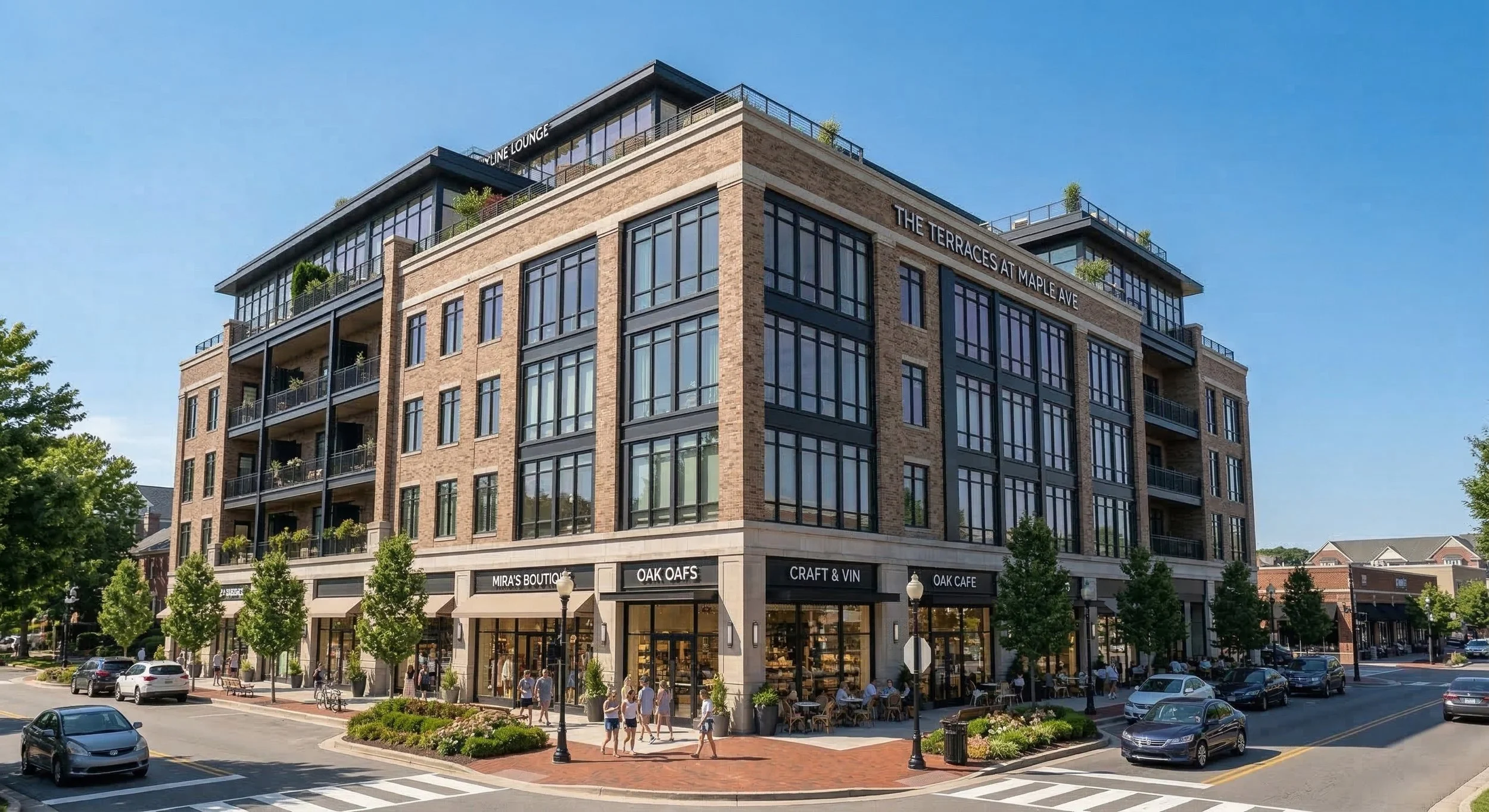
The thriving ground floor retail, pedestrian activity, and expansive windows demonstrate the symbiotic relationship between urban energy and the premium resident experience that drives ROI.
If you are operating near a university like RMU, traditional leasing leaves money on the table. Student housing generally commands higher per unit rents because multiple tenants are paying for individual beds.
Our analysis shows the per bed model typically yields 20% to 35% higher revenue. But you have to design for it by ensuring Bedroom Parity, where both bedrooms are roughly the same size (120 to 140 SF) with equivalent closet space. While a Jack and Jill setup is a baseline option, the ultimate goal is providing individual, private en suite bathrooms for each student. Privacy is the absolute highest value amenity in this demographic, and delivering it is what secures that premium rent.
The Bottom Line on a $6 Million Build
Let us attach real dollars to this. If you are building a $6 million project, thoughtful resident experience design delivers hard returns:
20% faster lease up translates to roughly $50,000 to $100,000 in carried interest savings.
3% higher occupancy provides $15,000 to $30,000 in annual revenue protection.
A 5% rental premium generates $35,000 to $70,000 in annual revenue uplift.
That is a total annual financial impact of $100,000 to $200,000 per year, or a 1.7% to 3.3% improved project ROI.
Architectural strategy is not just about creating a code compliant, buildable box. It is about designing a space that makes someone say, "I want to live here," the second they walk in. That feeling is a financial asset that justifies the architectural investment.
Stop value engineering the experience out of your buildings. Design the ROI.
Are you planning a multifamily or mixed use development in 2026? Do not leave your ROI to chance by settling for commodity architecture. Let us talk about how to turn your next building into a high performing asset. Contact David Stumpf Architecture today to schedule a strategic design consultation.
