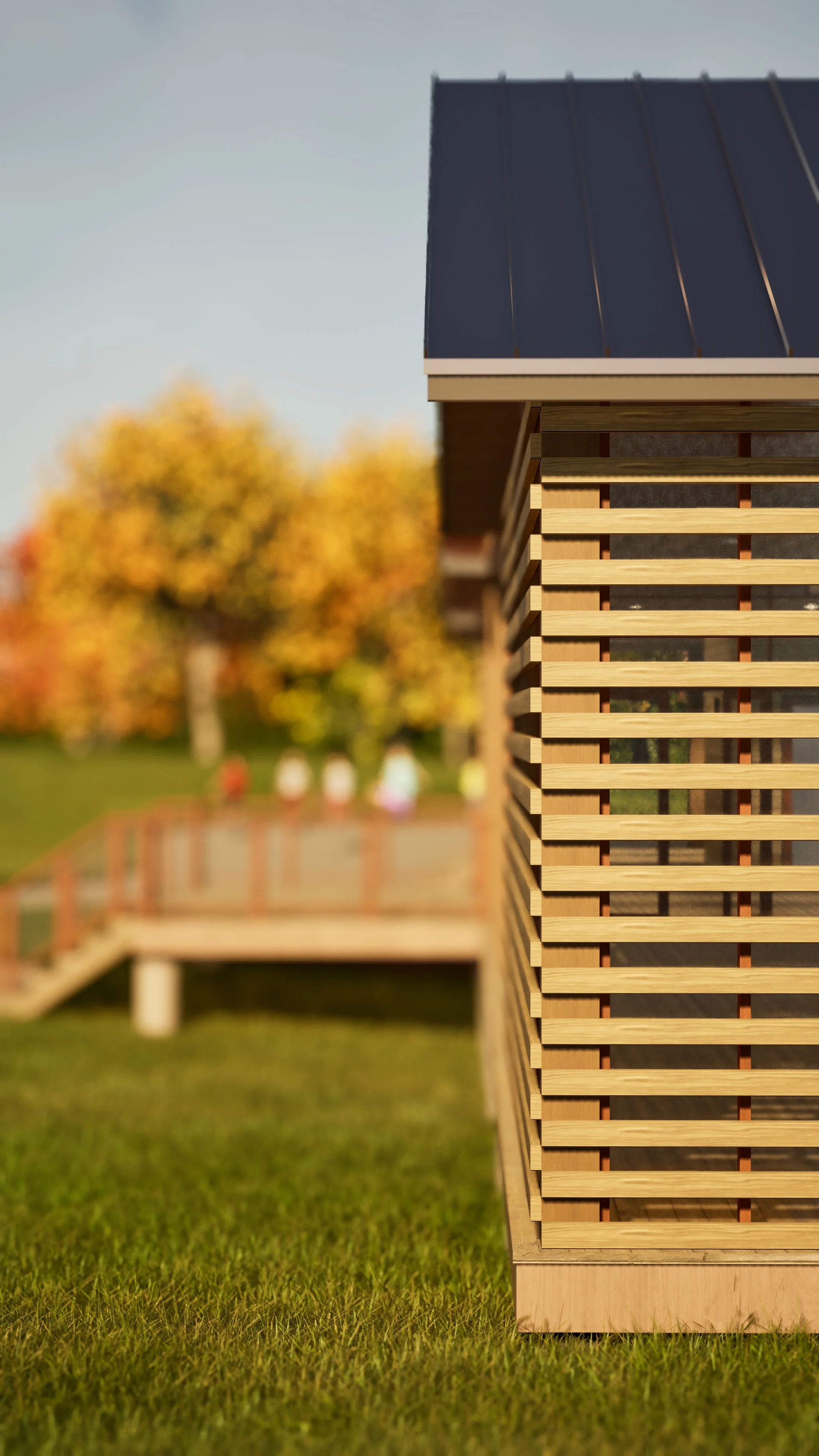
Land Heritage Institute: Modern Vernacular & Light Frame Craft
Project Snapshot
Location: San Antonio, Texas (South)
Project Type: Cultural, Educational & Public Infrastructure
Size: 3,811 SF
Construction Method: Light Wood Frame (Volunteer-Built / AmeriCorps)
Design Strategy: Contemporary Texas "Dog Trot" / Repetitive Structural Bays
Client: The Land Heritage Institute
Architect: David Stumpf Architecture (David Stumpf, AIA)
Project Narrative
Design for Constructability: The AmeriCorps Challenge
The Land Heritage Institute, a non-profit dedicated to Texas land use history, required a new Visitor and Reception Center that would sit "lightly on the land." The primary constraint was unique: the facility had to be constructed entirely by AmeriCorps volunteers.
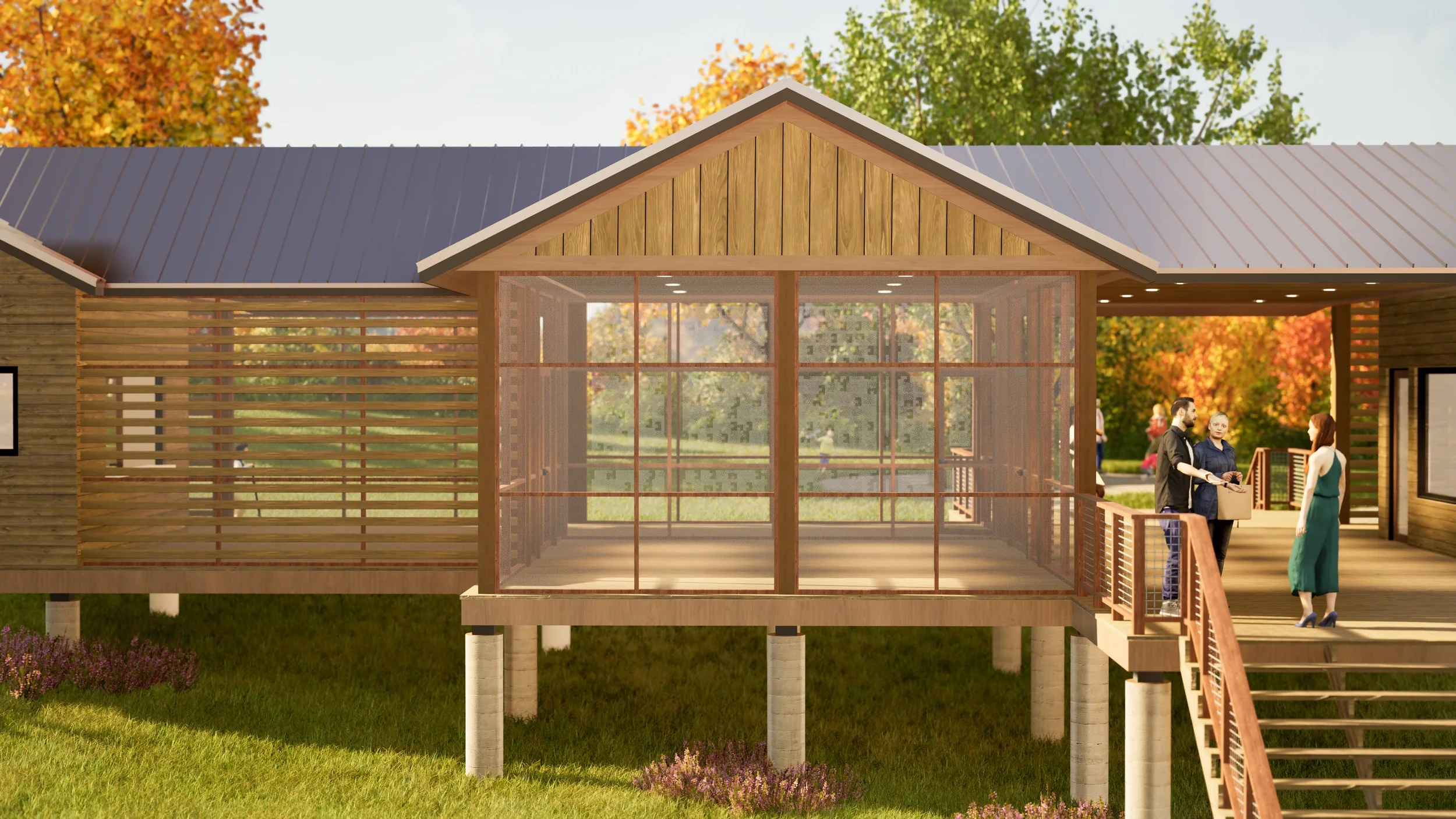
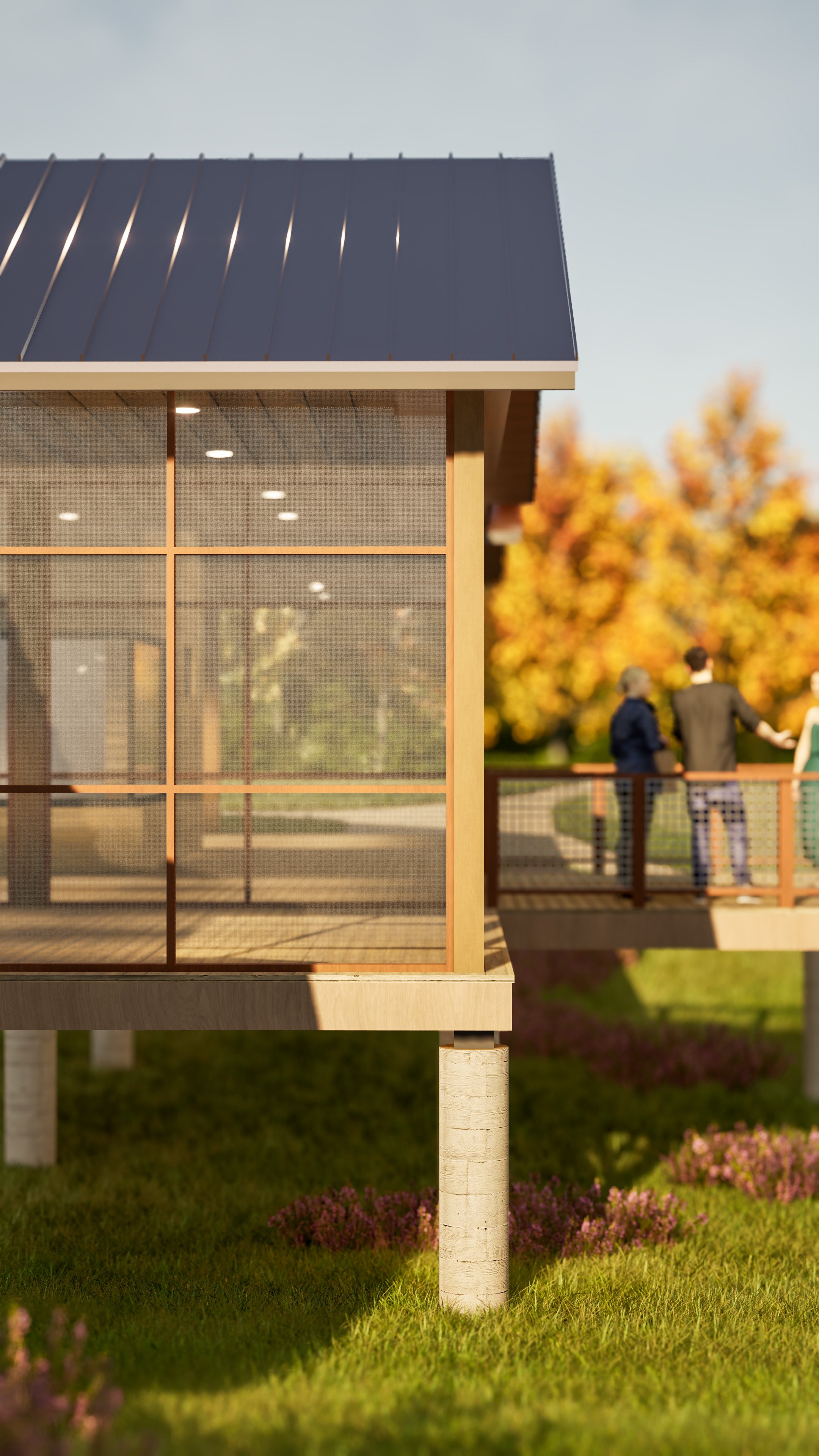
This dictated a rigorous approach to the structural design. We could not rely on heavy machinery or complex steel connections. Instead, we developed a simplified Light Frame methodology. By utilizing a repetitive stick-built logic—similar in rhythm to timber framing but executed with lighter dimensional lumber—we allowed for high-quality assembly by a volunteer workforce without sacrificing architectural character.
The Modern "Dog Trot" Typology
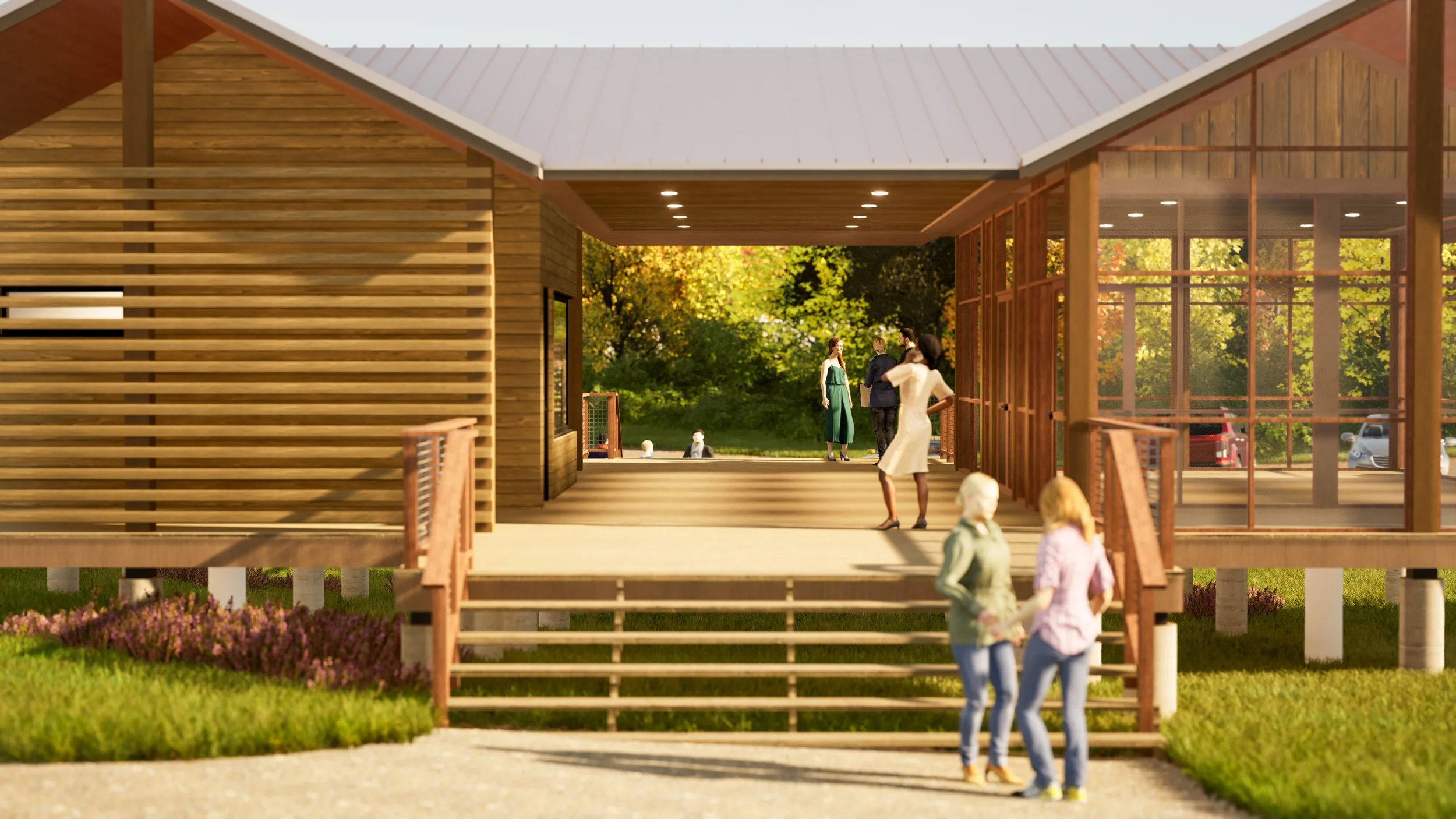
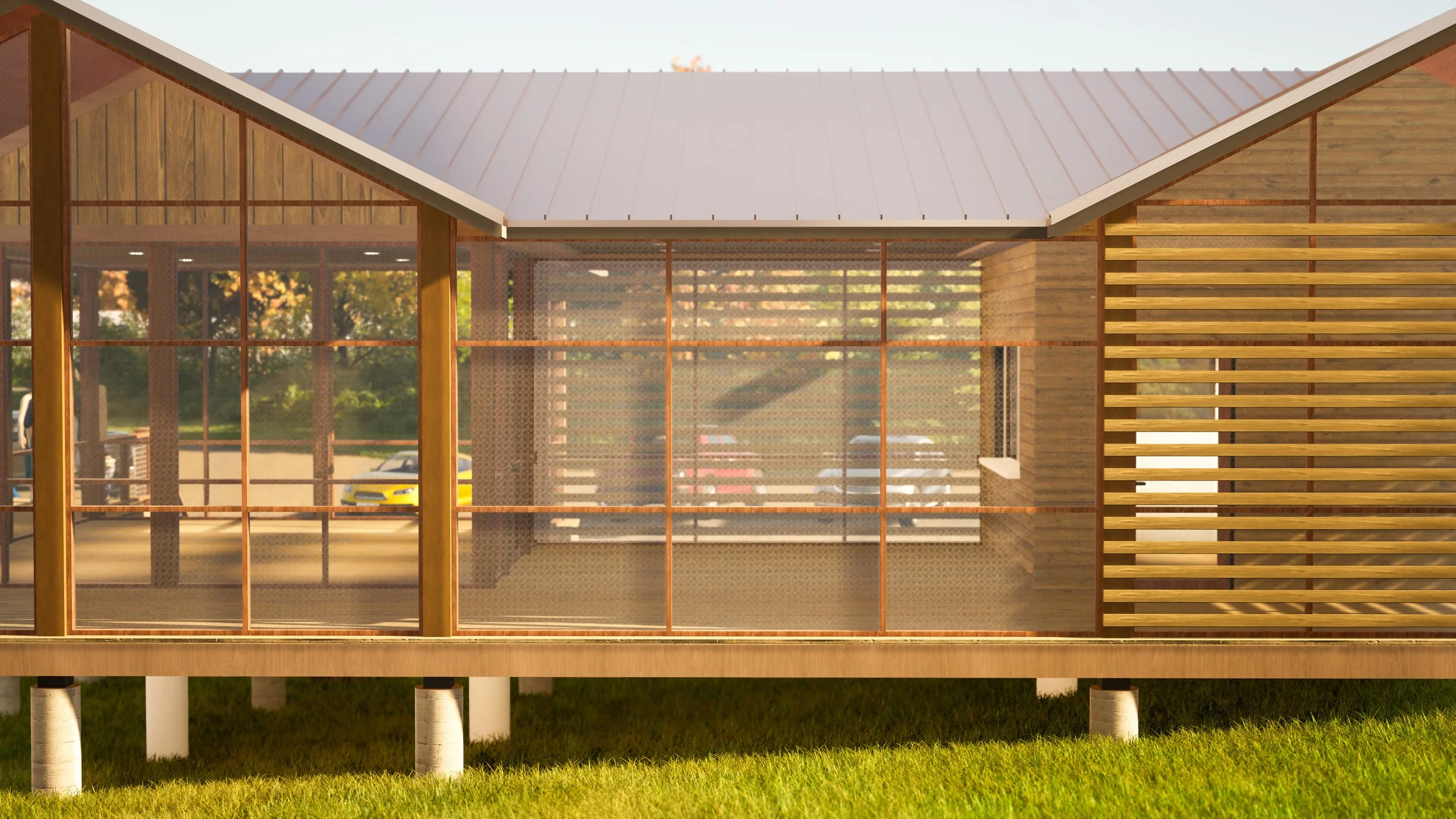
To address the hot South Texas climate, we reinterpreted the traditional Texas "Dog Trot" style. The 3,811 SF structure is organized into a segmented six-bay system.
This structural rhythm creates a series of alternating enclosed spaces (kitchen, offices, meeting rooms) and open-air breezeways. These breezeways function as passive cooling devices, channeling wind through the framing to reduce thermal load while providing shaded areas for informal social interaction.
Minimal Impact & Flexible Programming
The facility serves a dual purpose: a formal reception center for the Institute and a flexible meeting hub for educational groups. By breaking the massing into smaller structural bays, we minimized the visual and physical footprint on the sensitive landscape. The result is a welcoming entry point that embodies the Institute's mission—teaching the history of how Texans have lived and worked the land—through the honesty of its construction.